




















18067909587
工作日 9:00-19:00
中文简体
If you are a bank boss and in the headlines, you are either Jamie Dimon or you have screwed up. Bill Winters, the chief executive of Standard Chartered, an emerging-markets bank headquartered in Britain, made waves recently when he talked about a planned 15% reduction in back-office jobs over the next four years. Four words in particular landed him in trouble: a reference to the replacement of "lower-value human capital" by financial capital invested in automation. The kerfuffle provides an instructive case study in a problem now faced by almost every manager: how to talk about the effect of artificial intelligence on jobs.
如果你是银行老板并登上新闻头条,那么你要么是杰米·戴蒙,要么就是搞砸了。 总部位于英国的新兴市场银行渣打c的首席执行官比尔·温特斯最近引发热议,他谈到计划在未来四年内将后台岗位缩减15%。 其中有四个字尤其让他陷入麻烦:他提到用投资于自动化的“金融资本”来替代“低价值的人力资本”。 这场风波为如今几乎每位管理者都面临的一个问题提供了具有启发性的案例研究:该如何谈论人工智能对就业的影响。
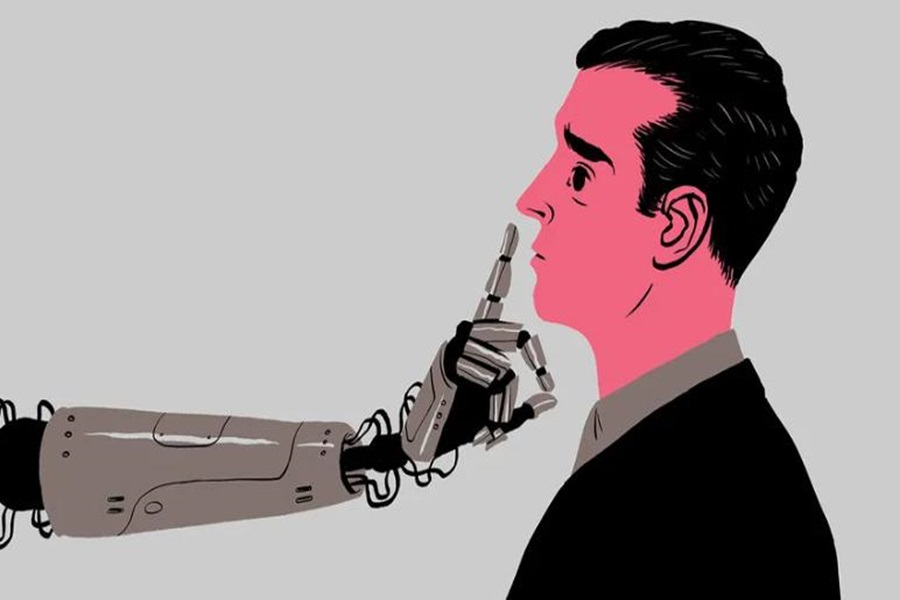
Bosses want employees to use AI in order to improve productivity, see off AI-using rivals and more. Employees, on the whole, are less enthused. They can see some benefits to the technology. But they can also see the risks that it poses to jobs. Even if the numbers do not point to widespread lay-offs yet, an AI backlash is well under way. It has spawned the acronym "FOBO", for "fear of becoming obsolete". It shows up in viral videos—of American graduates booing commencement speakers who mention the technology and of a departing Meta employee singing about the tech giant's AI strategy to the tune of "American Pie" ("And now I'm singing bye bye to professional pride").
老板们希望员工使用人工智能,以提高生产力、击退运用人工智能的竞争对手等等。 总体而言,员工们则没那么热衷。 他们能看到这项技术的一些好处。 但也能看到它给就业带来的风险。 尽管目前的数据尚不指向大规模裁员,但一股反对人工智能的浪潮已然兴起。 它催生了一个缩写词“FOBO”,代表“害怕被淘汰”。 这种情绪在病毒式传播的视频中可见一斑——视频里,美国毕业生对提及该技术的毕业典礼演讲者发出嘘声,还有一位离职的Meta员工以《美国派》的曲调唱着这家科技巨头的人工智能策略(“如今我唱着‘再见’,告别职业自豪感”)。
Job insecurity is not great for anyone. It has the most unpleasant effects on employees. A literature review by Magnus Sverke of Stockholm University and his co-authors—published in 2019, before the start of the generative-AI age—found that it is generally associated with worse health outcomes and decreased job satisfaction. But firms suffer, too. In theory, job insecurity might benefit organisations if it spurred greater employee effort. In practice, it seems to lead to impaired performance.
工作缺乏安全感对谁都不太好。 它对员工有着最令人不悦的影响。 斯德哥尔摩大学的马格努斯·斯韦尔克及其合著者发表于2019年(即生成式人工智能时代开启之前)的一篇文献综述发现,工作不安全感通常与较差的健康状况和较低的工作满意度相关。 但企业也会因此受损。 理论上,如果工作不安全感能激发员工更加努力,它或许对组织有利。 但在实践中,它似乎会导致绩效下降。
The degree of trust that employees have in the management of their firms can alleviate the effects of job insecurity, however. A paper by Wen Wang of the University of Leicester and her co-authors analysed data from a national survey of British employees and employers, covering over 16,000 respondents at 1,100 organisations. The researchers found that objective measures of job insecurity, such as cuts in working hours, were generally associated with lower levels of employee commitment, but that this effect was weaker if workers viewed bosses as being honest, reliable and fair.
不过,员工对公司管理层的信任程度能够缓解工作不安全感带来的负面影响。 莱斯特大学的王文及其合著者的一篇论文,分析了针对英国员工和雇主的一项全国性调查的数据,涵盖了1100家组织的16000多名受访者。 研究人员发现,工作不安全感(如工时削减等)的客观衡量指标,通常与较低的员工忠诚度相关,但如果员工认为老板诚实、可靠且公正,这种影响就会减弱。
On this score, Mr Winters got one thing badly wrong but a lot of other things right. His choice of words was his big mistake. Referring to people as human capital is always pretty weird; no one gives a farewell speech saying "what I'm really going to miss is the human capital". Appearing to divide people into lower-value and higher-value categories was never going to work out well, whatever Mr Winters's intention.
在这方面,温特斯先生有一件事做得非常糟糕,但其他许多事情则做得不错。 措辞是他的一大失误。 把人称为人力资本总是很奇怪;没人会在告别演说中说“我真正会怀念的是人力资本”。 而且,无论温特斯先生的意图如何,将人划分为“低价值”和“高价值”两类,这样的做法绝不可能有好结果。
The clumsy phrasing also missed an important truth. Some jobs are more vulnerable than others to AI: roles that comprise repetitive and easily verifiable tasks, for example, or that do not require interpersonal skills. But exposed jobs cannot be neatly categorised as low-value, as the fate of software engineers shows. Programmers are in the firing line because AI is good at coding and because capital investment in the technology has to be paid for somehow—Meta connected its latest lay-offs to the need to offset other spending.
这种笨拙的措辞还忽略了一个重要事实。 有些工作比其他的更容易受到人工智能的影响:例如,那些包含重复性且易于核验的任务的角色,或者那些不需要人际交往技能的岗位。 但容易受影响的工作并不能简单地归为低价值工作,软件工程师的命运就证明了这一点。 程序员正处在风口浪尖,因为人工智能擅长编写代码,而且对该技术的资本投入总得通过某种方式获得回报——Meta将其最近的裁员与需要抵消其他支出的行为联系起来。
Look at the fuller version of Mr Winters's remarks, and in other respects, he deserves credit. In particular, he talked about the pre-emptive efforts that the bank made to find new jobs for employees who were going to be affected by a back-office automation project but wanted to stay at Standard Chartered. Preparing employees for changes in the labour market is the best way to retain the trust and expertise of existing staff. That might mean giving people the skills to do a less automatable kind of job; DBS, a Singapore-based bank, has positioned employees to move from being customer-service agents, say, to becoming salespeople. It also, inevitably, means lots of training on AI tools.
看看温特斯先生言论的更完整版本,在其他方面,他值得肯定。 尤其是,他谈到了银行所做的预先努力,为那些将要受到后台自动化项目影响但希望留在渣打银行的员工寻找新的工作岗位。 让员工为劳动力市场的变化做好准备,是留住现有员工信任和专业能力的最佳方式。 这可能意味着,要让员工掌握从事不那么容易被自动化替代的工作所需的技能;总部位于新加坡的星展银行,已让员工做好准备,例如从客服代表转变为销售人员。 这也不可避免地意味着要进行大量关于人工智能工具的培训。
The long-term impact of AI on jobs is unknowable. Firms and employees have different incentives—they are not all in this together. And the burden of managing widespread disruption will fall largely on governments. But bosses can still mitigate job insecurity by identifying the skills they will continue to want from humans, and then helping employees to acquire them. For people to embrace AI, they have to be braced for it, too.
人工智能对就业的长期影响尚不可知。 企业和员工有着不同的动机——他们并非完全利益一致。 而管理广泛性颠覆的重担将在很大程度上落在各国政府肩上。 但老板们仍然可以通过明确他们将持续需要人类具备哪些技能,然后帮助员工掌握这些技能,来减轻工作的不安全感。 要让人们接受人工智能,他们也需要为此做好准备。